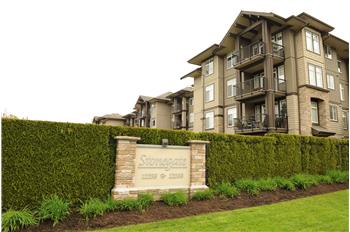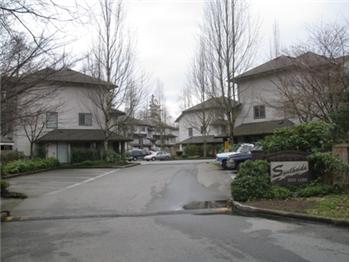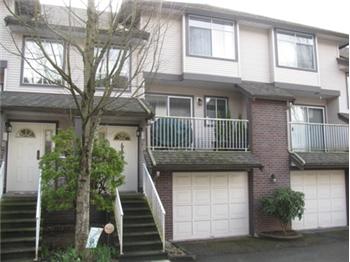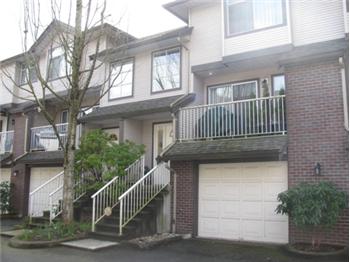
  |
$369,900
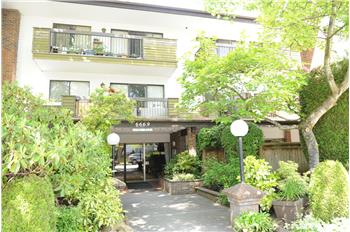
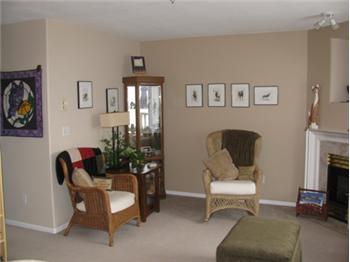
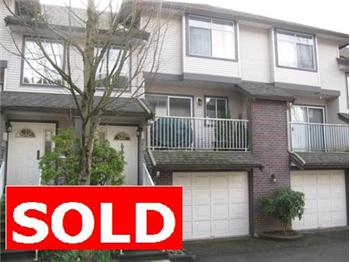
Townhouse 3 Bedrooms 2 Full Bathrooms 1 Half Bathroom Interior: 1,517 sqft Year Built: 1994 MLS #: V938948
|
#59 2450 Lobb Ave
|
Presented by Nazir Abdulla |

|
 Request More Information
  Schedule Showing
 Email to Friends and Family
 Print Flyer
Neighborhood InfoSource: Wikipedia.
Port Coquitlam is a city in British Columbia, Canada. Located 27 km east of Vancouver, it sits at the confluence of the Fraser River and the Pitt River. Coquitlam borders it on the north, the Coquitlam River borders it on the west, and the cities of Maple Ridge and Pitt Meadows lie across the Pitt River. Port Coquitlam is almost entirely bisected by a Canadian Pacific Railway yard with two underpass crossings and one overpass. Port Coquitlam is often referred to as "PoCo." It is Canada's 88th largest city by population. Port Coquitlam is not to be confused with the adjacent and larger Coquitlam.
[edit] HistoryThe area was first inhabited by the Coast Salish people, including the Kwikwetl'em people. The first European settlers began farming beside the Pitt River in 1859. The Canadian Pacific Railway moved its terminus from Vancouver to the banks of the Fraser River in 1911. Port Coquitlam was first incorporated as a municipality on March 7, 1913. Port Coquitlam was originally mostly farmland; however, because of the densification and expansion of Vancouver, it has now become mostly suburban housing, especially on its northern and southwestern sides. The economy has diversified with a variety of industrial and commercial developments, including metal fabrication, high technology industries, and transportation. [edit] DemographicsThe second half of the 1990s saw the population grow at a rate of 9.8%, with a large number of immigrants, who by 2001, comprised 25% of the population. English was the first language for 76% of the inhabitants. Religions practiced were Catholic 36%, Protestant 32%, Other 14%, and No Religion 18%. In 2009 Port Coquitlam was rated 85th for its murder rate (for Canadian cities with a population over 50K). [1] [edit] TransportationBecause of its primarily suburban nature, Port Coquitlam relies heavily on its vehicular roads to move people and goods. For example, two of its major arterial roads, Shaughnessy Street and Lougheed Highway bisect Port Coquitlam east to west and north to south, respectively. TransLink provides a number of bus routes throughout the city. The most used bus route in this section of the Greater Vancouver Regional District is the 159. The 159 connects southern Port Coquitlam to the SkyTrain. Other bus routes in the city are the 160 and C38. The 160 links Port Coquitlam and Vancouver. It passes through Coquitlam Central Station and Port Moody Station. Two major stops in the city include the Port Coquitlam Centre and the Port Coquitlam Station. Numerous other Community Shuttles serve the Port Coquitlam area, including the C38 which connects Northern Port Coquitlam to Coquitlam Central Station via Port Coquitlam Station. See also: List of bus routes in Metro Vancouver
The Lougheed Highway passes through Port Coquitlam, running from Coquitlam in the west to the Pitt River Bridge in the east. Although this highway has made much of Port Coquitlam a very congested area, it is one of the few major arterial highways in the area. The Mary Hill Bypass, officially known as Highway 7B, runs adjacent to the Fraser River from the Pitt River Bridge on the east to the Port Mann Bridge on the west. Canadian Pacific Railway has a major rail yard in the central sector of the city. In October 2009 the new Pitt River Bridge, a new seven-lane cable stayed bridge, opened to the public replacing the existing crossing. The previous crossing was made up of 2 swing bridges which were removed upon completion of the new cable stayed bridge. The Pitt River Bridge crosses the Pitt River connecting Port Coquitlam to neighbouring Pitt Meadows. In March 2010 the Coast Meridian Overpass, a new four-lane cable stayed bridge, opened to the public giving a new option for traveling north to south over the Canadian Pacific Railway Oxford Street rail yard. A 25 km hiking and biking trail, known as the Traboulay PoCo Trail, completely surrounds the city. [edit] Public schoolsPublic schools in Port Coquitlam are part of School District 43 Coquitlam. [edit] Secondary schools[edit] Middle schools
[edit] Elementary schools
[edit] Private schools
[edit] Notable residents
|