  |
$875,000
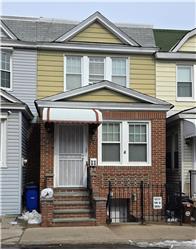
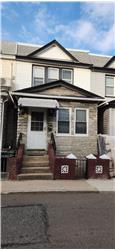
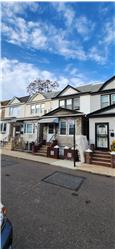
Single Family Home 3 Bedrooms 1 Full Bathroom Interior: 1,100 sqft Lot: 1,184 sqft Year Built: 1920
|
58-55 41st Drive
|
Presented by Mark Hannigan |

|
 Request More Information
  Schedule Showing
 Email to Friends and Family
 Print Flyer
Neighborhood Info
Woodside is a neighborhood in the western portion of the borough of Queens in New York City. It is bordered on the south by Maspeth, on the north by Astoria, on the west by Sunnyside, and on the east by Elmhurst, Jackson Heights, and East Elmhurst. Some areas are widely residential and very quiet, while other parts, especially the ones around Roosevelt Avenue, are busier. In the 19th century the area was part of the Town of Newtown (now Elmhurst). The adjacent area of Winfield was largely incorporated into the post office serving Woodside and as a consequence Winfield lost much of its identity distinct from Woodside. However, with large-scale residential development in the 1860s, Woodside became the largest Irish American community in Queens, being approximately 80% Irish by the 1930s and maintaining a strong Irish culture today. In the early 1990s, many Asian American families include a large Filipino community moved into the area, and as a result the current population is 30% Asian American. South Asians and Latinos have also moved to Woodside in recent years. Reflecting its longtime diverse cuisines, the neighborhood is filled with many cultural restaurants and pubs. It is also home to some of the city's most popular Thai, Filipino, and South American eateries.[4][5] Woodside is located in Queens Community District 2 and its ZIP Code is 11377.[1] It is patrolled by the New York City Police Department's 108th Precinct.[6] Politically, Woodside is represented by the New York City Council's 22nd and 26th Districts.[7] History[edit]Early years[edit]
More details

More details
For two centuries following the arrival of settlers from England and the Netherlands, the area where the village of Woodside would be established was sparsely populated. The land was fertile, but also wet. Its Native American inhabitants called it a place of "bad waters", and it was known to early European settlers as a place of "marshes, muddy flats and bogs", where "wooded swamps" and "flaggy pools" were fed by flowing springs."[10][11] Until drained in the nineteenth century, one of these wet woodlands was called Wolf Swamp after the predators that infested it.[12][13][14] This swamp was not the only place where settlers might fear for the safety of their livestock, and even themselves. One of the oldest recorded locations in Woodside was called Rattlesnake Spring on the property of a Captain Bryan Newton.[13] The vicinity came to be called Snake Woods, and one source maintains that "during New York's colonial period, the area was known as 'suicide's paradise,' as it was largely snake-infested swamps and wolf-ridden woodlands."[15] Woodside was settled by farmers in the early 18th century.[16] In time, inhabitants learned how to farm the land profitably. The marsh grasses proved to be good for grazing and grains, fruits, and vegetables could be grown on the surrounding dry land. By the middle of the 18th century, the area's farmers had drained some of its marshes and cut back some of its woods to expand its arable land and eliminate natural predators. Agricultural produce found markets in New York City, and at the beginning of the 19th century the area came to be "abundantly conspicuous in the wealth of the farmers and in the beauty of the villas."[9] A late 19th-century historian described one of the area's 19th-century farms as a pleasing mix of woodlot, tilled acreage, grazing land, orchard, and pleasure garden. He believed "it would probably have been hard to find anywhere in the vicinity of New York a more picturesque locality."[17] Another observer of this time praised Woodside's "pure atmosphere and delightful scenery."[18] In the 19th century, the area was part of the Town of Newtown (now Elmhurst). The adjacent area of Winfield was largely incorporated into the post office serving Woodside and as a consequence Winfield lost much of its identity distinct from Woodside. Some idea of the bucolic nature of the place that would become Woodside can be seen in descriptions of an ancient central landmark, a great chestnut tree. The tree was hundreds of years old when it finally came down in the last decade of the 19th century. It stood on high ground near a junction of three dirt roads and "was of great diameter, some 8 or 10 feet"—perhaps 30 feet in circumference.[19] Its size and central location made it a natural meeting place, its surface one on which to tack public notices, and a strategic point of considerable military significance during the Revolutionary War.[9][12][19] A 19th-century antiquarian wrote of the great tree as it stood during the American Revolution and in doing so named the families of the local landowners: Woodside was first developed on a large scale beginning in 1867 by speculative residential neighborhood builder Benjamin W. Hitchcock, who also founded Corona and Ozone Park, and John Andrew Kelly.[20] The neighborhood's location about three miles from Hunter's Point on the Long Island Rail Road line made it an ideal location for a new suburban community. In 1874, the New York Times described Woodside: Agriculture[edit]By the middle of the 19th century, drainage and improved agricultural techniques had increased the proportion of Woodside's arable land to some two-thirds of its total. Flowers and dairy products were added to the fruits and vegetables which farmers took to city markets.[9] These landowners also reaped benefits from improved transportation. Mid-century construction of a plank road from Newtown to Williamsburg and a later one from Newtown to Hunters Point made access to East River ferries quicker and easier.[22] In 1860 a corporation presided over by a local resident, John C. Jackson, built a gravel-topped toll road between Flushing and the ferry at Hunters Point.[23] The Plank Road disappeared during construction projects of the later 19th century but Northern Boulevard tracks closely resemble the route of Jackson Avenue.[24][25][26] Residential estates[edit]
More details
The improvements in transportation that initially benefited agriculture eventually led to its decline. As it became quicker and more convenient for residents to travel from their homes to other parts of Queens, to Brooklyn, and to Manhattan, the area came to be seen as both desirable and affordable for the construction of housing for city-dwellers and increases in land values enticed farm owners to sell out. John Sackett came from a family of religious dissenters that had settled in Queens late in the 17th century. In 1802 he inherited a farm of 115 acres including much of what is now Woodside, and in 1826 his heirs sold much of the property to John A. Kelly, the son of a German immigrant, and his sister-in-law (also of German descent), Catherine B. (Friedle) Buddy.[30] As other well-to-do merchants had done in other areas of Queens, Kelly and Buddy bought farm property for use as a rural estate where they planned to live in the warmer months of the year.[31] Not long after, a friend of Kelly's, William Schroeder, bought another parcel of the Sackett property for the same purpose. Like Kelly, he came of a family that had emigrated from Germany and, like Kelly, he had achieved wealth as a merchant in Charleston, South Carolina. Unlike Kelly, however, he did not move North, but kept the estate for use during summer vacations.[31] After Kelly and Schroeder had moved in, two other well-to-do men of German extraction made country retreats for themselves in Woodside. They were Gustav Sussdorf and Louis Windmuller. Like Kelly and Schroeder, Sussdorf was a Charleston merchant. In 1859 he sold his fancy goods business and moved to New York.[32][33] Not long after, he bought a farm owned by the family of Thomas Cumberson who had died in 1849. It is quite possible that he learned of the place through acquaintance with Schroeder or, more likely, Kelly.[9][34] Windmuller was of a younger generation than Kelly, Schroeder, and Sussdorf. He emigrated to New York in the aftermath of the Revolutions of 1848. Only 18 years old and penniless, he found success as a commission agent, bringing goods to clients in the U.S. from Germany and other European countries. In 1867 he had accumulated enough savings to buy property adjoining Sussdorf's. The land had formerly belonged to the Morrell family, but had been acquired by a speculator, John A. Mecke, and became available to Windmuller upon Mecke's death and the bankruptcy of his estate.[a] Residential development[edit]
More details
As farms gave way to country estates, so country estates would, in turn, give way to residential development, as, in the decades after 1850, the land was broken into small lots for construction of single-family houses. As before, this new shift was brought about largely by improvement in transportation resources. In 1854, the first steam-powered passenger rail service came to the area. In that year a passenger depot of the Flushing Railroad from Long Island City to Flushing opened for operation near the southern boundary of what would become the village of Woodside. The line gave access to New York City via the Hunters Point Ferry and to Brooklyn via horse-drawn omnibus.[36] In 1861 a second line opened running directly through what would shortly become the village of Woodside. This was a segment of the Long Island Rail Road which operated between Hunters Point and Jamaica, replacing an earlier segment which passed through Brooklyn to the ferry dock in Williamsburg.[37][38] In 1869, another line, the Flushing and North Side Railroad, traversed the same path through Woodside.[37][39] And soon after, in 1874, a short spur, the Flushing and Woodside Railroad opened its station in the village.[37][40] The construction of this rail service led directly to the division of property near train stations into small lots for construction of houses for working-class families. The area that would become Woodside was not the first community to grow out of Queens farmland. Before the end of the 1850s Woodhaven, Astoria, Maspeth, Corona, Hunters Point, and Winfield all attracted land speculators.[41][42] Woodside's developers were, however, among the first to divide properties into lots for construction of small homes for working-class families. In doing so they were the first to use a set of new sales techniques to lure buyers. And they were the first to apply a name to a locale which emphasized its real or supposed virtues. A late 19th century author said "Woodside" was an appropriate name for the community these land speculators created. He maintained that others, created later, were "without the slightest significance, historic or otherwise, and of the kind apparently chosen by boarding schoolgirls to roll romantically from the tongue.".[17] These included Ozone Park, Corona, Winfield, Glendale, Laurel Hill, Elmhurst, and Linden Hill. The real estate promoters who created Woodside were mostly of German extraction. Members of the Kelly family were first, followed by Alpheus P. Riker, Henry G. Schmidt, John A. Mecke, and Emil Cuntz. The Kelly family developed the property where they resided while the others bought land specifically to divide it into building lots.[31] Riker came from a German family that had settled in Queens while it was still part of New Netherland.[9][43][44][45][46][47]
|
|||||||||||||||||||||||||||||||||||||||||||||||