  |
$1,259,000
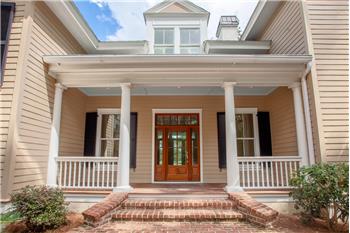
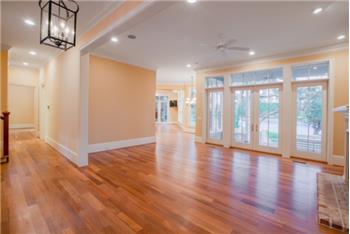
Single Family Home 6 Bedrooms 4 Full Bathrooms 1 Half Bathroom 1 Unit Interior: 4,605 sqft Lot: 0.84 acre(s) Year Built: 2007 MLS #: 158568
|
202 Bull Point Dr
|
Presented by Stacey Hall |

|
 Request More Information
  Schedule Showing
 Email to Friends and Family
 Print Flyer
Neighborhood InfoEasily the most serene and beautiful community in the Lowcountry of South Carolina, Bull Point, with its lush maritime forest and pristine vistas, has remained virtually untouched throughout the centuries. Dating as far back as the beginning of the English settlement of South Carolina in 1670, Bull Point’s history lies in early records indicating that it was originally part of Tomotley Barony, a 13,000-acre Proprietary Land Grant, located in Prince William Parish. This original grant to Charles Edward in 1726, and one year later relinquished to Thomas Lowndes, became one of Landgrave Edmond Bellinger Baronies. The Bull Family made their presence known in the Carolinas with the arrival of Stephen Bull, the English- appointed Deputy of the Lords Proprietors of Carolina in 1670. In 1671, Stephen Bull assisted in the site selection for what would become the thriving Port City of Charleston. Interestingly enough, his oldest son, William, assisted General James Oglethorpe in laying out the Georgia colony and, in particular, the city of Savannah, sixty-two years later. William also extended the families’ pre-eminence with his election to The Common House of South
Carolina, from 1706 to 1719, and his appointment to The King’s Council of South Carolina from 1721 to 1737 by Lord Carteret. From 1738 until his death in 1755, William Bull served as Lieutenant Governor of South Carolina. He also served as acting Governor between 1737 and 1743. In 1729, he purchased a 6000-acre tract of land from Provost Marshall Thomas Lowndes in the Prince William Parish, which included most of what would become Bull Point Plantation. He named this large tract, Sheldon Plantation. Lowcountry heritage and Beaufort County history, in particular, were inextricably bound to the Sheldon area, commencing with the Tuscarorah and Yemassee Indian Wars of 1715. Consequently, the new town of Beaufort was destroyed, and several hundred black and white settlers were killed. Some of the most significant fighting occurred in our area. William Bull built, and later was buried in, the Old Sheldon Church. Constructed in 1751, the church served as the center for spiritual, social and political life of the people of the Prince William Parish. It was burned by the Tories in 1779, rebuilt in 1825-1826, and damaged again by General Sherman in 1865. The historical church ruins still stand today about one half mile from the gates of Bull Point. It was for William Bull that Bull Point Plantation was named. Survey records from this period are vague, but they seem to indicate that the Ralph Izard family owned Tomotley Plantation, including some, if not all, of Bull Point from 1755 to 1860, except for the 10 years it was owned by James Deveaux. Colonel Nathanial Barnwell owned land on the Point until 1913, when he and his wife, Leila, conveyed ownership of Bull Point and five other parcels of land to Mary McCurdy. Vague plats as recent as 1952 indicate Tomotley Plantation and Bull Point Plantation were jointly owned and operated. Through a number of real estate transactions, the 700-acre peninsula, now known as Bull Point Plantation, was acquired in 1995 by the original developers. They committed themselves to the preservation of the natural beauty and historical heritage of Bull Point. This commitment is clearly outlined in the recorded Bull Point Covenants & Restrictions, which governs the development of this pristine tract of land. They also empowered an Architectural Review Board to assist property owners in the building process to ensure that the homesites preserve and protect the environment, while offering homes of distinction to those who appreciate the land’s natural beauty.
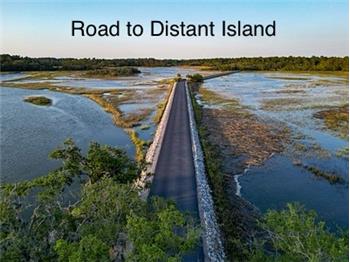
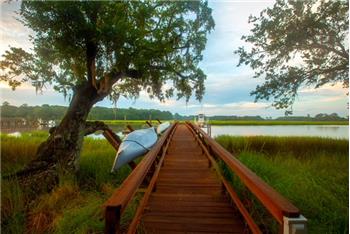
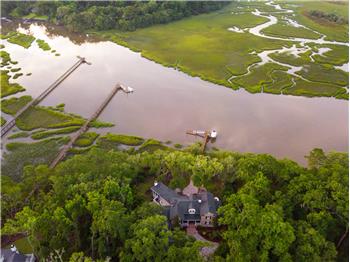
FACTS ABOUT BULL POINT PLANTATION§ SIZE: Bull Point Plantation is a peninsula of 704 acres surrounded by saltwater marshes and tidal tributaries of the Huspah Creek. These waters flow into the Atlantic Ocean. It is a one-hour boat ride from Bull Point to the Atlantic Ocean and less than a 25-minute boat ride to the Intercoastal Waterway, leading to downtown Beaufort.
§ ELEVATION: Bull Point is classified in the “C” and “B” Flood Zones. Flood Insurance is not required for construction in Bull Point. Elevations are as high as 32’ above Mean Sea Level.
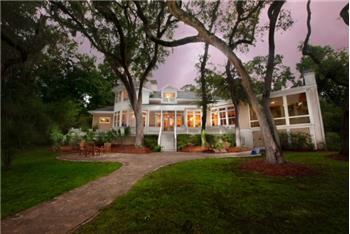
§ TREE COVER: The 704 acres were classified as “maritime forest.” The tree and plant cover are a mixture of hardwoods with some scattered pines. The Plantation is blessed with giant specimen live oaks and magnolias. Wild palmettos, cedar and hickory trees also can be found.
§ HOMESITES: Homesites vary in size from .67 acres to more than 4 acres. Only single family homes are allowed.
§ NATURE and WILDLIFE: Nature and wildlife abound at Bull Point. With conservation in mind, families of Bull Point enjoy barred owls, eagles, osprey, egrets, herons, wood ducks and mallards. Small birds also abound, including cardinals, chickadees, bluebirds, hummingbirds, woodpeckers, gold finches and the spectacular painted buntings. Fox, white tail deer, opossum, armadillos, gray squirrels and raccoons are also nature inhabitants of the plantation. In the waters of Huspah Creek, which surround Bull Point, dolphins are frequent visitors. Shrimp and blue crab are also plentiful in these serene waters. Fishing for sea trout and red fish is excellent.
|