|
|
$2,000
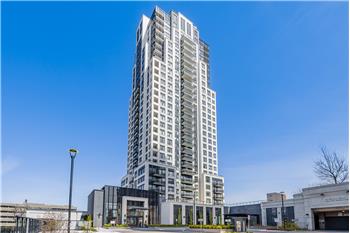
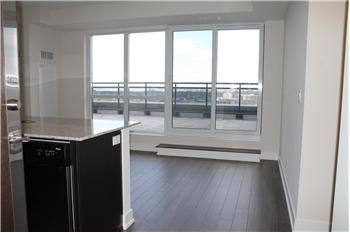
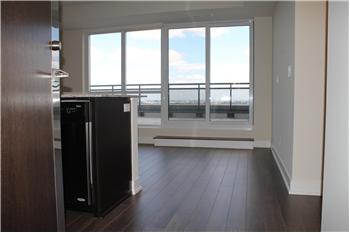
Condominium 1 Bedroom 1 Full Bathroom
|
2 Eva Rd 2622
|
Presented by Shekhar Kamboj Simmy Kamboj |

|
 Request More Information
  Schedule Showing
 Email to Friends and Family
 Print Flyer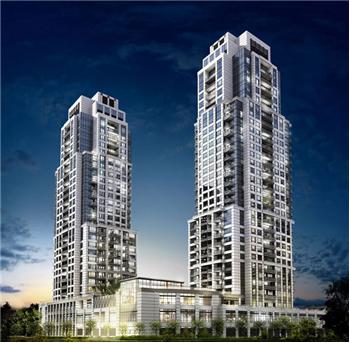
Neighborhood InfoEtobicoke Today, Etobicoke's population (347,948 in 2011) is very diverse, with people from all over the world including Europeans, Asians, Middle Easterners, West Indians, Africans and South Asians. Etobicoke is still primarily suburban in development, with a lower population density than central Toronto, larger main streets, shopping malls and cul-de-sac housing developments. Etobicoke has several expressways within its borders, including the Queen Elizabeth Way, Gardiner Expressway, Ontario Highway 427, Ontario Highway 401 and Ontario Highway 409. Etobicoke is connected to the rest of Toronto by the Bloor-Danforth subway, which has its western terminus at Kipling Avenue. Etobicoke has one post-secondary institution: Humber College, which has two campuses. HistoryDifferent groups of First Nations peoples used the land that is now Etobicoke at different times. As the Algonquins gradually moved west from the Atlantic to Lake Erie, it is almost certain that they would have occupied this land at some point. By the time they were mostly settled on the shores of Georgian Bay, the Huron-Wendat were the primary residents of the north shore of Lake Ontario and somewhere in the 17th century they were pushed out by the Haudenosaunee (Iroquois) people. After continued harassment from the south, a coalition of the Ojibway, Odawa, and Potawatomi Algonquin nations, known as the Three Fires, gradually pushed the Haudenosaunee off this land and the Mississaugas settled there by 1695, fishing and growing crops more locally in the summer and hunting farther afield in the winter.[1] The name "Etobicoke" was derived from the Mississauga word wah-do-be-kang (wadoopikaang),[2] meaning "place where the alders grow", which was used to describe the area between Etobicoke Creek and the Humber River. The first provincial land surveyor, Augustus Jones, also spelled it as "ato-be-coake". Etobicoke was finally adopted as the official name in 1795 on the direction of Lieutenant Governor John Graves Simcoe.[3] Etobicoke was intended by the British to be included in the Toronto Purchase of 1787.[3] However, whether the western boundary of the purchase was the Humber River or the Etobicoke River (now, Etobicoke Creek) was disputed. The Mississauga Indians allowed British surveyor Alexander Aitkin to survey the disputed land, and the British paid an additional 10 shillings for the purchase, although the purchase was never formally agreed to. The dispute was eventually settled between the Government of Canada and the Mississaugas in 2010.[4] Settlers began to move in from Britain. Early settlers included many of the Queen's Rangers, who were given land in the area by Simcoe to help protect the new capital of Upper Canada. In 1793-95, the Honourable Samuel Smith, a colonel in the Queen's Rangers, received land grants of 1,530 acres (6.2 km2), extending from today's Kipling Avenue to Etobicoke Creek, and north to Bloor Street.[5] The first land patent was issued to Sergeant Patrick Mealey on March 18, 1797, for a plot on the west side of Royal York Road on Lake Ontario.[6] This was part of the First Military Tract, or "Militia Lands", which extended from today's Royal York Road to Kipling Avenue, south from Bloor Street. More land was granted the members of the Queen's Rangers in the First Military tract, but most Rangers did not occupy their land and many sold their acreage to others after a short time. The census of 1805 counted 84 people in the township of Etobicoke. In 1806, William Cooper built a grist mill and saw mill on the west bank of the Humber river, just south of Dundas Street. The 1809 census counted 137 residents.[3] The Dundas Street bridge opened in 1816, making the township more accessible.[citation needed] On May 18, 1846, the Albion Road Company was incorporated. Its purpose was to build and maintain a road to the north-west corner of Etobicoke, where a new community was planned. At the same time, John Grubb, who had already founded Thistletown, hired land surveyor John Stoughton Dennis to plan a community at the intersection of Islington Avenue and Albion Road, to be named Saint Andrew's. Plan 6 for this community was registered on October 15, 1847. The French master of Upper Canada College, Jean du Petit Pont de la Haye, contracted land surveyor James McCallum Jr to create a plan for the community planned by the Albion Road Company, and Plan 28 was registered for Claireville on October 12, 1849.[6] 
The township of Etobicoke was incorporated on January 1, 1850.[7] The first meeting of the town council was held on January 21. Present at the meeting were reeve William Gamble, vice-reeve W. B. Wadsworth and aldermen Moses Appleby, Thomas Fisher and John Geddes.[8] The council convened monthly meetings at a variety of places. In 1850, the population of the township was 2904.[citation needed] By 1881, the population of Etobicoke township was 2976.[8] In 1911, the community of Mimico was incorporated on land taken from Etobicoke township.[9] New Toronto was incorporated on January 1, 1913.[3] Early on, there was talk of merging Mimico and New Toronto. A 1916 referendum on amalgamating the two communities was approved by the residents of Mimico, but rejected by residents of New Toronto.[5] In 1917, Mimico became a town and in 1920, New Toronto became the Town of New Toronto. Long Branch was incorporated in 1930 as a village.[10] In 1954, Etobicoke Township became a part of the newly formed regional government, the Municipality of Metropolitan Toronto ("Metro"). In 1967, the township of Etobicoke was merged with three small lakeside municipalities — the Village of Long Branch, the Town of New Toronto, and the Town of Mimico — to form the Borough of Etobicoke. The borough was reincorporated as a city in 1984.[7] In 1998, six local municipalities (including Etobicoke) and the Metropolitan Toronto government merged to form the amalgamated city of Toronto.[11] CharacterEtobicoke has the lowest population density of the former cities and boroughs that currently make up the city of Toronto. This is mainly due to its expanses of industrial lands along the various expressways. Residential development consists primarily of single-family dwellings, although several large multi-storey high-rise condominium developments have been built in south Etobicoke near the Humber River over the past few years. The central areas of Etobicoke are generally middle class. The central and northern areas of Etobicoke contain numerous high-density apartment complexes set in the middle of sizable, open fields and parks. The central/southern areas of Etobicoke, such as Markland Wood, The Kingsway, New Toronto, Mimico and Long Branch, consist of large green spaces, numerous parks, and main street shopping areas. Kingsway South neighbourhood has attracted many affluent individuals and families (as of 2001, over 50% of households have an income in excess of C$100,000/year).[12] Etobicoke has numerous public parks, notable among them is James Gardens on the banks of the Humber River. The park includes seasonal flowers, walkways, a rock garden, streams, and waterfalls. It is a very popular site for taking wedding photographs. Also located in Etobicoke, among others, are Colonel Samuel Smith Park, situated on old asylum grounds shared with nearby Humber College and the Humber Bay Park. Etobicoke has numerous golf courses (including St. George's Golf and Country Club, ranked third best in Canada),[13] NeighbourhoodsEtobicoke is generally divided into three large areas that roughly correspond to the three political ridings. Each consists of neighbourhoods, mostly developments of 19th-century 'postal villages' (rural neighbourhoods), that were built at important points along the early roads and railways; especially the three former 'Lakeshore Municipalities' that separated from Etobicoke in the early 20th century and Etobicoke's central Islington community:
DemographicsSee also: People from Etobicoke
In 2011, according to the National Household Survey, Etobicoke was 58.7% White, 13.6% South Asian, 10.5% Black, 3.0% Latin American, 3.0% Filipino, 2.2% Chinese, 1.4% Korean, 1.3% Southeast Asian, 1.3% West Asian, 1.2% Arab, and 3.8% Other. 46.9% of the population are immigrants and 37.2% of North Etobicoke is of South Asian origin, the highest such percentage in Toronto.[14] 

EducationSecular Anglophone public schools in Etobicoke are overseen by the Toronto District School Board. High schools include Central Etobicoke High School; Etobicoke Collegiate Institute, founded in 1928; Kipling Collegiate Institute; Lakeshore Collegiate Institute (originally New Toronto Secondary School, founded in 1950); Martingrove Collegiate Institute; North Albion Collegiate Institute; Richview Collegiate Institute, founded in 1958; Silverthorn Collegiate Institute; Thistletown Collegiate Institute; West Humber Collegiate Institute, founded in 1966; Etobicoke School of the Arts, founded in 1981 in the former Royal York Collegiate Institute; Scarlett Heights Entrepreneurial Academy (formerly, Collegiate Institute); and the School of Experiential Education, an alternative school founded in 1971. In addition to the secular Anglophone public school system, Etobicoke is home to several public Anglophone Catholic schools, overseen by the Toronto Catholic District School Board. These include Michael Power/St. Joseph; Bishop Allen Academy; Don Bosco Catholic Secondary School (formerly Keiller Mackay Collegiate Institute); Father John Redmond; Father Henry Carr; Holy Child; Our Lady of Sorrows Elementary School; Nativity of Our Lord Elementary School; Father Serra Catholic School; and Monsignor Percy Johnson Catholic Secondary School. Other schools include: Humberwood Downs J.M.A.; West Humber Junior; Smithfield; Elmbank; Humbercrest; Eatonville Junior School and Missisauga private school. West Glen Junior School, located on Cowley Avenue, educates in grades JK-5 (1953); Norseman Junior Middle School opened its doors to students from Kindergarten to Grade 6 in January 1953. From 1968 to 1981, it became the middle school for the area with Grades 6, 7, and 8. Since 1981, the school has served students from Junior Kindergarten to Grade 8. The second storey serves middle school, Grades 6 to 8. Hilltop Middle School is home to students in both the English and French stream. Hollycrest located at Centennial Park is a sports oriented middle school. The Conseil scolaire Viamonde operates secular Francophone schools, and the Conseil scolaire de district catholique Centre-Sud operates Catholic Francophone schools. Until 1998, the Etobicoke Board of Education operated anglophone secular public schools. EconomyPizza Pizza and Sunwing Airlines have their headquarters in Etobicoke.[15][16] Skyservice, an airline, was headquartered in Etobicoke, until its demise.[17] Canada 3000 had its headquarters in the City of Etobicoke before it became a part of Toronto;[18] the headquarters remained there until the closing of the airline.[19] The construction industry in Etobicoke has been booming, with many new condominium towers being developed along the waterfront near Humber Bay and along Bloor street. This has helped increase Etobicoke's population after a short period of decline.[20] The Film and Television industry has been gaining promise in the area.[21] Etobicoke is also home to a rib fest that is held every year on Canada day long weekend at Centennial Park. The weekend is fil led with amazing entertainment, food, midway, and great music. SportMain articles: Amateur sport in Toronto and List of sports teams in Toronto
Etobicoke has a wide range of indoor and outdoor sporting leagues including baseball, soccer, football, hockey, and ringette. Some of the prominent clubs include the Etobicoke Kangaroos Australian rules football club, the Serbian White Eagles FC club, the Stars Diving Club[22] and Toronto Croatia. Southern Etobicoke is also home to the new MasterCard Centre, the practise rink of the Toronto Maple Leafs. Etobicoke is the hometown of Major League Baseball Star Joey Votto as well as National Hockey League Star P. K. Subban. Etobicoke is also home to Centennial park which is a huge green space in west Toronto, and poses a great vence for soccer, basketball, skiing, hockey, basketball, hiking, track and field and also rugby. TransportationSeveral major freeways like 427, 401, 407, 27 and QEW are routed through the area, making it ideal for automobile-based transportation. There are numerous four- and six-lane thoroughfares in Etobicoke, laid out on a grid system. Many exceptions to Toronto's gridded street matrix are found in Etobicoke. A number of overpasses and awkward intersections, such as Bloor/Kipling/Dundas West (Six-Points), have been created in an effort to reconcile the grid with these planning anomalies. The Bloor-Danforth subway rapid-transit line has its western terminus at Kipling Avenue and Dundas Street. Islington Station is a transit nexus for bus routes into Mississauga to the west. There are many bus routes that service Etobicoke frequently. An LRT line is planned for the north end of Etobicoke along Finch Avenue to connect to the Yonge-University-Spadina subway line. Etobicoke is also home to a GO station, Mimico. |