  |
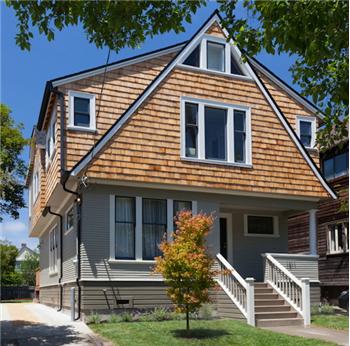
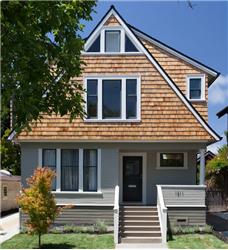
$895,000
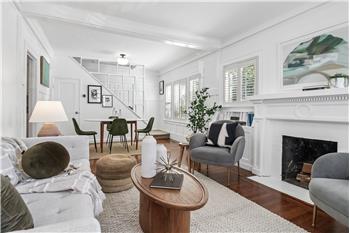
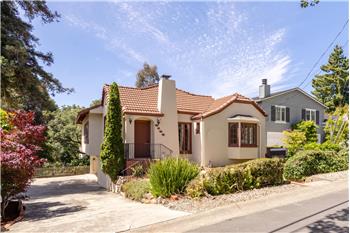
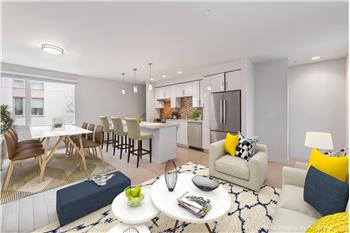
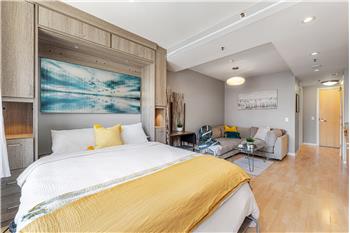
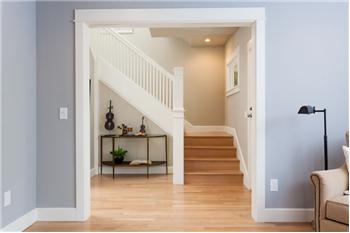
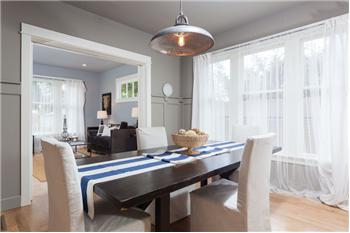
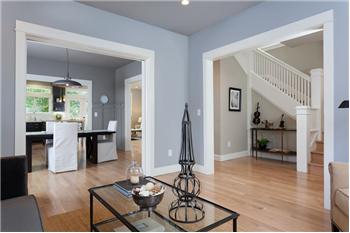
Single Family Home 3 Bedrooms 2 Full Bathrooms 1 Half Bathroom Interior: 1,979 sqft
|
1811 Parker Street
|
Presented by Eddie O'Sullivan |
|
 Request More Information
  Schedule Showing
 Email to Friends and Family
 Print Flyer
Neighborhood InfoEarly 20th centuryBerkeley's slow growth ended abruptly with the Great San Francisco Earthquake of 1906. The town and other parts of the East Bay somehow managed to escape serious damage from the massive temblor, and thousands of refugees flowed across the Bay. In 1908, a statewide referendum that proposed moving the California state capital to Berkeley was defeated by a margin of about 33,000 votes.[7] A legacy of this ballot measure that survives was the naming of streets in the vicinity of the proposed capitol grounds for the counties of California. In 1909, the citizens of Berkeley adopted a new charter, and the Town of Berkeley became the City of Berkeley. Rapid growth continued up to the Crash of 1929. The Great Depression hit Berkeley hard, but not as hard as many other places in the U.S., thanks in part to the University. On September 17, 1923, a major fire swept down the hills toward the University campus and the downtown section. Some 640 structures burned before a late afternoon sea breeze stopped its progress, allowing firefighters to put it out. The next big growth occurred with the advent of World War II, when large numbers of people moved to the Bay Area to work in the many war industries, such as the immense Kaiser Shipyards in nearby Richmond. One who moved out, but played a big role in the outcome of the War was U.C. Professor and Berkeley resident J. Robert Oppenheimer. During the war, an Army base, Camp Ashby, was temporarily sited in Berkeley. The element berkelium was synthesized and named in 1949, recognizing the University, thus also placing the city's name in the list of elements. [edit]1950s and 1960s
The postwar years saw moderate growth of the City, as events on the U.C. campus began to build up to the recognizable activism of the sixties. In 1950, the Census Bureau reported Berkeley's population as 11.7% black and 84.6% white.[8] In the 1950s, McCarthyism induced the University to demand a loyalty oath from its professors, many of whom refused to sign the oath on the principle of freedom of thought. In 1960, a U.S. House committee (HUAC) came to San Francisco to investigate the influence of communists in the Bay Area. Their presence was met by protesters, including many from the University. Meanwhile, a number of U.C. students became active in support of the Civil Rights Movement. Finally, the University in 1964 provoked a massive student protest by banning distribution of political literature on campus. This protest became the Free Speech Movement. As the Vietnam Warrapidly escalated in the ensuing years, so did student activism at the University, particularly that organized by the Vietnam Day Committee. See also: Berkeley riots
Berkeley is strongly identified with the rapid social changes, civic unrest, and political upheaval that characterized the late 1960s. In that period, Berkeley—especially Telegraph Avenue—became a focal point for the hippie movement, which spilled over the Bay from San Francisco. Many hippies were apolitical drop-outs, rather than students, but in the heady atmosphere of Berkeley in 1967–1969 there was considerable overlap of the hippie movement and the radical left. An iconic event in the Berkeley Sixties scene was a conflict over a parcel of University property south of the contiguous campus site that came to be called "People's Park." The battle over disposition of People's Park resulted in a month-long occupation of Berkeley by the National Guard on orders of then-Governor Ronald Reagan. In the end, the park remained undeveloped, and remains so today. A spin-off, "People's Park Annex," was established at the same time by activist citizens of Berkeley on a strip of land above the Bay Area Rapid Transit subway construction along Hearst Avenue northwest of the U.C. campus. The land had also been intended for development, but was turned over to the City by BART and is now Ohlone Park. [edit]1970s to present
The 1970s saw a decline in the population of Berkeley, partly due to an exodus to the suburbs. Some moved because of the rising cost of living throughout the Bay Area, and others because of the decline and disappearance of many industries in West Berkeley. From the 1980s to the present, Berkeley has seen rising housing costs, especially since the mid-1990s. In 2005–2007, sales of homes began to slow, but average home prices, as of 2010, remain among the highest in the nation. The era of large public protest in Berkeley waned considerably with the end of the Vietnam War in 1974. In 2006, the Berkeley Oak Grove Protest began protesting construction of a new sports center annex to Memorial Stadium at the expense of a grove of oak trees on the UC campus. The protest ended in September 2008 after a lengthy court process. In 2007–08, Berkeley received media attention due to demonstrations against a Marine Corps recruiting office in downtown Berkeley and a series of controversial motions by Berkeley's City Council regarding opposition to Marine recruiting. (See Berkeley Marine Corps Recruiting Center controversy.) In the Fall of 2011, the nationwide Occupy Wall Street movement made its appearance in two locales in Berkeley: on the campus of the University of California and as an encampment in Civic Center Park. While the 1960s were the heyday of liberal activism in Berkeley, it remains one of the most overwhelmingly Democratic cities in the United States. |


![[icon]](http://en.wikipedia.org/wiki/File:Wiki_letter_w_cropped.svg)