  |
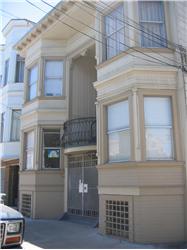
$875,000
Multi Family 4 Units Interior: 3,814 sqft Year Built: 1908 MLS #: 372210
|
150-152 San Carlos
|
Presented by Eddie O'Sullivan |
|
 Request More Information
  Schedule Showing
 Email to Friends and Family
 Print Flyer
Neighborhood InfoMission Dolores, the eponymous former mission located the far western border of the neighborhood on Dolores Street continues to operate as a museum and as a California Historical Landmark, while the newer basilica built and opened next to it in 1913 continues to have an active congregation. Near Mission Dolores, Dolores Park, officially Mission Dolores Park, bounded by Dolores Street, Church Street, 18th Street, and 20th Street, the largest park in the neighborhood, and one of the most popular parks in the city. Across from Dolores Park, is Mission High School built in 1927 in the Mediterranean Revival\Baroque Churrigueresque style. Although gentrification during the 1990s and 2000s shifted the demographics and culture of the neighborhood, to account for a large younger, more White American, and increasingly Gay, Lesbian and transgender mix, the Mission remains the cultural nexus and epicenter of San Francisco's and to an increasingly lesser extent, the Bay Area's Latino, Chicano, Nicaraguan Salvadorian, Guatemalan, community. While Mexican, Salvadorian, and other Latin American businesses are pervasive throughout the neighborhood, residences are not evenly distributed. Most of the neighborhood's Hispanic residents live on the eastern and southern sides. The Western and northern sides of the neighborhood are more affluent and less diverse.[4]. Numerous Latino artistic and cultural institutions are based in the Mission. The Mission Cultural Center for the Latino Arts, established by Latino artists and activists, is an art space. The local bilingual newspaper, El Tecolote, was founded in 1970. The Mission's Galería de la Raza, founded by local artists active in el Movimiento (the Chicano civil rights moment), is a nationally recognized arts organization. Late May, the city's annual Carnaval festival and parade marches down Mission Street. Meant to mimic the festival in Rio de Janeiro, it is held in late May instead of the traditional late February to take advantage of better weather. The Mission is also famous for its Murals initiated by the Chicano Art Mural Movement of the 1970s and inspired by the traditional Mexican paintings made famous by Diego Rivera. Although located on various buildings and walls all over the neighborhood, some of the more significant ones are located on Balmy Alley, and Clarion Alley. The Mission district is also most famous and influential for introducing Mexican food to Americans, especially burritos. the Mission district is the original home of the San Francisco burrito style. There are also a high concentration of Salvadorean, Guatemalan, Nicaraguan, restaurants there as well. Due to the existing cultural attractions, less expensive housing and commercial space, and the high density of restaurants and drinking establishments, the Mission is a magnet for young people. An independent arts community also arose and since the 1990s, the area has been home to the Mission School art movement. Many studios, galleries, performance spaces, and public art projects are located in the Mission, including the , Project Artaud, Southern Exposure, Art Explosion Studios, Artist Xchange, Artists' Television Access, and the oldest, alternative, not-for profit art space in the city of San Francisco, Intersection for the Arts. The Roxie Theater, the oldest continuously operating movie theater in San Francisco, is host to repertory and independent films as well as local film festivals. Poets, musicians, emcees, and other artists sometimes gather on the southwest corner of the 16th & Mission intersection to perform.[5] The neighborhood is served by the BART rail system with stations on Mission Street at 16th Street and 24th Street, by Muni bus numbers 9, 12, 14, 14L, 22, 27, 33, 48, 49, 67, and along the western edge by the J Church Muni Metro line, which runs down Church Street and San Jose Avenue. |