|
|
$409,000
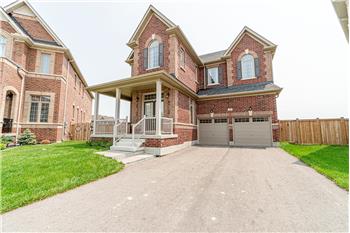
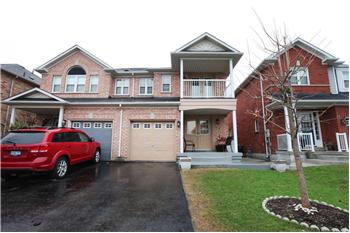
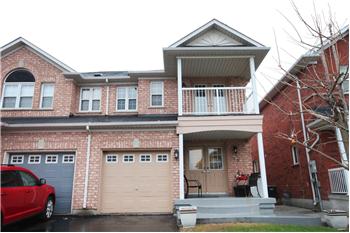
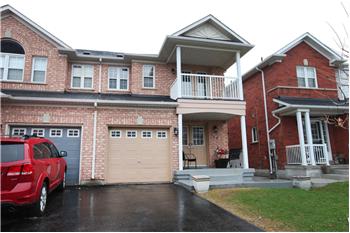
Single Family Home 4 Bedrooms 4 Full Bathrooms MLS #: W2337074
|
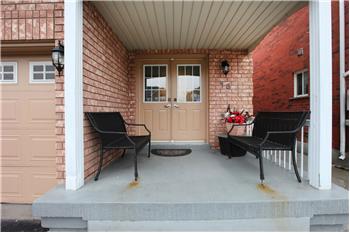
13 Briarcroft Rd
|
Presented by Shekhar Kamboj Simmy Kamboj |

|
 Request More Information
  Schedule Showing
 Email to Friends and Family
 Print Flyer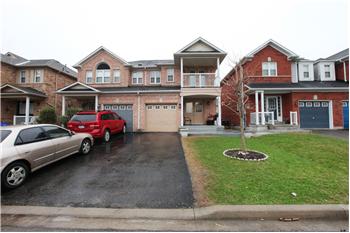
Neighborhood InfoBrampton (/ˈbræmptən/ or /ˈbræmtən/) is a Canadian city in Southern Ontario, Canada. It is a suburban city in the Greater Toronto Area (GTA) and the seat of Peel Region. As of the 2011 census, Brampton's population was 523,911.[2] Brampton was incorporated as a village in 1853, taking its name from the rural town of Brampton, in Cumbria, England. The city was once known as The Flower Town of Canada, a title based on its large greenhouse industry. Today, Brampton's major economic sectors include advanced manufacturing, retail administration and logistics, information and communication technologies, food and beverage, life sciences and business services. HistoryJohn Haggert, Brampton's first mayor Main article: History of Brampton See also: List of mayors of Brampton, Brampton Fall Fair, and Brampton Library Prior to the 1800s, all real business in Chinguacousy Township took place at Martin Salisbury's tavern. One mile distant at the corner of Main and Queen streets, now the recognized centre of Brampton, William Buffy's tavern was the only significant building. At the time, the area was referred to as "Buffy's Corners". By 1834, John Elliott laid out the area in lots for sale, calling it "Brampton," which was soon adopted by others.[3] In 1853, a small agricultural fair was set up by the newly initiated County Agricultural Society of the County of Peel, and was held at the corner of Main and Queen streets. Grains, produce, roots, and dairy products were up for sale. Horses and cattle, along with other lesser livestock, were also sold at market. This agricultural fair eventually became the modern Brampton Fall Fair. In that same year Brampton was incorporated as a village.[3] By 1869, Brampton, with a population of 1800, was in the County Town of Peel in the Township of Chinguacousy. It was a Station of the Grand Trunk Railway. The County buildings were erected c. 1869 of freestone and white brick.[4] A federal grant allowed the village to found its first public library in 1887, which included 360 volumes from the Mechanic's Institute (est 1858). In 1907, the library received a grant from the Carnegie Foundation, set up by United States steel magnate and philanthropist Andrew Carnegie, to build a new, expanded library; it serves several purposes, featuring the Brampton Library. The Carnegie libraries were built on the basis of communities coming up with matching funds and guaranteeing maintenance. A group of regional farmers in Brampton had trouble getting insurance from city-based companies. After several meetings in Clairville Hall, they decided to found the County of Peel Farmers Mutual Fire Insurance Company. In 1955, when the company moved to its third and current location, 103 Queen Street West, it took the new name of Peel Mutual Insurance Company. It reigns as the longest-running company in modern Brampton. Harmsworth Decorating Centre was established in 1890, as Harmsworth and Son, operated out of the family's house on Queen Street West. The current location was purchased on September 1, 1904, after a fire destroyed their original store. Purchased for $1,400, the 24 Main Street South location is the longest-operating retail business in what is now Brampton. Edward Dale, an immigrant from Dorking, England, established a flower nursery in Brampton[5] shortly after his arrival in 1863.[6] Dale's Nursery became the town's largest[5] and most prominent employer, developed a flower grading system,[6] and established a global export market for its products.[5] The company chimney was a town landmark,[6] until Brampton Town Council allowed it to be torn down in 1977.[6] At its height, the company had 140 greenhouses,[7] and was the largest cut flower business in North America,[8] producing 20 million blooms and introducing numerous rose and orchid varietals and species to the market.[8] It also spurred the development of other nurseries in the town. Forty-eight hothouse flower nurseries once did business in the town.[6][8] Mid-way through the twentieth century, the two townships of Chinguacousy and Toronto Gore were incorporated into Brampton. The small pine added to the center of the shield on the Brampton city flag represents Chinguacousy, honouring the Chippewa chief Shinguacose, "The Small Pine." After this merger, outlying communities such as Bramalea, Heart Lake and Professor's Lake, Snelgrove, Tullamore, and Mayfield, were developed. In 1963, the town established The Flower Festival of Brampton, based on the Rose Festival of Portland, Oregon in the United States. It began to market itself as the Flower Town of Canada.[6] In a revival of this theme, on 24 June 2002, the City Council established the "Flower City Strategy",[9][10] to promote a connection to its flower-growing heritage.[11] The intention was to inspire design projects and community landscaping to beautify the city, adopt a sustainable environmental approach, and to protect its natural and cultural heritage.[11] The Rose Theatre was named in keeping with this vision and is to serve as a cultural institution in the city.[6] In addition, the city participates in the national Communities in Bloom competition as part of that strategy. The Old Shoe Factory, located on 57 Mill Street North, once housed the Hewetson Shoe Company. It was listed as a historical property under the Ontario Heritage Act in 2008. Today it is occupied by various small businesses. The lobby and hallways retain details from 1907. Walls are decorated with pictures and artifacts of local Brampton history and old shoe making equipment.[12] A self-guided historical walking tour of downtown Brampton called, “A Walk Through Time”.,[13] is available at Brampton City Hall and online free of cost. Development of BramaleaMain article: Bramalea, Ontario Developed as an innovative "new town", Bramalea was constructed approximately 40 kilometres northwest of Toronto. Located in the former Chinguacousy Township, it was Canada's first satellite community developed by one of the country's largest real estate developers, Bramalea Limited. The name "Bramalea" was created by the farmer William Sheard, who combined "BRAM" from Brampton, "MAL" from Malton (then a neighbouring town which is now part of the city of Mississauga), and "LEA", an Old English word meaning meadow or grassland. He sold the land to Brampton Leasing (the former name of the developer) and built one of Bramalea's first houses on Dixie Road. The community was developed according to its detailed master plan, which included provisions for a parkland trail system and a "downtown" to include essential services and a shopping centre. The downtown's centrepiece was the Civic Centre, built in 1972 to include the city hall and library. Directly across Team Canada Drive, a shopping centre named Bramalea City Centre was built. These developments were connected by a long underground tunnel, planned to provide protection from winter weather. But, the tunnel has long since been closed due to safety issues. Urbanists have also found that pedestrians at street level make for much livelier and safer streets. Other features included a police station, fire hall, bus terminal, and a collection of seniors' retirement homes. Each phase of the new city was marked with progressing first letters of street names. Development started with the "A" section, with street names such as Argyle, Avondale, and Aloma. Developer then created a "B" section, "C" section, and so forth. Children on the boundaries of these divisions would regularly compete in street hockey games, pitting, for example, the "D" section versus the "E" section. The community was initially developed with a large number of recreational facilities, including tennis courts, playgrounds, hockey/lacrosse rinks and swimming pools. An extensive parkland trail and sidewalk system connects the entire community. Region of PeelBrampton's City HallIn 1974, the Ontario provincial government decided to update Peel County's structure. It amalgamated a series of villages into the City of Mississauga. In addition, it created the new City of Brampton from the greater portion of the Townships of Chinguacousy and Toronto Gore, including Bramalea and the other communities such as Claireville, Ebenezer, Victoria, Springbrook, Churchville, Coleraine, and Huttonville. While only Huttonville and Churchville still exist as identifiable communities, other names like Claireville are re-emerging as names of new developments. The province converted Peel County into the Regional Municipality of Peel. Brampton retained its role as the administrative centre of Peel Region, which it already had as county seat. The regional council chamber, the Peel Regional Police force, the public health department, and the region's only major museum, the Peel Art Gallery, Museum and Archives, are all located in Brampton. This change had its critics among those with a strong sense of local identities. Bramptonians feared urban sprawl would dissolve their town's personality. Bramalea residents took pride in the built-from-scratch and organized structure that had come with their new city and did not want to give it up. Others in Bramalea accept they are part of Brampton, and they make up the tri-city area: Brampton, Heart Lake, Bramalea. In 1972, Bramalea had built its civic centre. Two years later, when Brampton and Bramalea merged, the new city's council chambers and other facilities were installed in the Bramalea building. They were moved from Brampton's modest downtown locale. The library systems of Brampton and Bramalea were joined, resulting in a system of four locations. Some have questioned the future of Peel Region as encompassing all of Brampton, Mississauga, and Caledon. The Mississauga council, led by Mayor Hazel McCallion, voted to become a single-tier municipality and asked the provincial government to be separated from Peel Region. They argued the city has outgrown the need for a regional layer of government, and that Mississauga is being held back by supporting Brampton and Caledon with its municipal taxes. Brampton's development as a cityThe early 1980s brought new residential development, as Brampton released large tracts of land to developers. In 1995 the large new suburban community of Springdale was developed, contributing to what people consider urban sprawl. This area had its largest boom in 1999, when development started to appear as far north as the city's border with Caledon. The region has designated this border as the line of demarcation for urban development until 2021. Neighbouring communities not part of Peel Region have also been dramatically affected by the city's sudden spurt. The end of Brampton and start of Georgetown, for example, has no identifiable boundary. In the early 1980s, Cineplex Odeon closed the Capitol Theatre in Brampton. The City bought the facility in 1981 under the leadership of councillor Diane Sutter. It adapted the former vaudeville venue and movie house as a performing arts theatre, to be used also as a live music venue. It was renamed the Heritage Theatre. Renovations and maintenance were expensive. In 1983, Toronto consultants Woods Gordon reported to the City that, rather than continue "pouring money" into the Heritage, they should construct a new 750-seat facility with up-to-date features. This recommendation was adopted, and the city designated the 2005/06 as the Heritage Theatre's "grand finale" season. The city funded construction of the new Rose Theatre, which opened in September 2006. Carabram was founded in 1984, the result of volunteers from different ethnic communities wanting to organize a festival celebrating diversity and cross-cultural friendship. The name was loosely related to Toronto's Caravan Festival of Cultures. Carabram's first event featured Italian, Scots, Ukrainian, and West Indian pavilions. By 2003, the fair had 18 pavilions attracting 45,000 visitors. The national government of Canada had an anchor pavilion in the late 1980s and early 1990s, and for Carabram's 25th Anniversary in 2009. Responding to a growing multi-cultural population, the Peel Board of Education introduced evening English as a Second Language (ESL) classes at high schools. Originally taught by volunteers, the classes eventually were scheduled as daytime courses taught by paid instructors. In the 1980s, the public and Catholic board expanded its languages programs, offering night classes in 23 languages. These were introduced due to requests by parents, who wanted their children to learn their ancestral languages and heritage. Brampton has a very large South Asian population, which is expected to grow at a high rate. In the early 1990s, Mayor Ken Whillans gained approval and funding for construction of a new city hall in Brampton's downtown. The facility was designed by local architects and constructed by Inzola Construction. Whillians did not get to see the opening of the new hall because of his death in August of that same year. With the return of city government to downtown Brampton, politicians and businesses allied to revitalize the core. Changes continue to reflect the growth of the city. In 1992 the City purchased the Brampton Fair Grounds, to be used for other development. The Agricultural Society relocated in 1997 outside the boundaries of the city to Heart Lake and Old School roads. In 1997 the Health Services Restructuring Commission (HSRC) decided to amalgamate Georgetown and District Memorial Hospital, Etobicoke General Hospital, and Peel Memorial Hospital as the William Osler Health Centre. It became what is now the province's 6th-largest hospital corporation. Brampton's 2003 Sesquicentennial celebrations boosted community spirit, reviving the tradition of a summer parade (with 100 floats), and creating other initiatives. To commemorate the town's history, the city under Mayor Fennell reintroduced floral projects to the community. These have included more plantings around town, the revival in 2005 of the city Parade, and participation in the Canada Communities in Bloom project. Current eventsIn early 2006, the Brampton campus of the William Osler Health Centre was renamed Peel Memorial Hospital and became independent of the William Osler family of hospitals. On October 28, 2007, Brampton Civic Hospital opened its doors while Peel Memorial Hospital closed for renovations. Since then, the fate of Peel Memorial has been the subject of controversy. Local residents want the hospital to re-open as an acute-care facility with an emergency department, arguing Brampton Civic Hospital's 479 beds are not sufficient to meet the needs of the fast-growing community. In September 2007, the new Rose Theatre opened its doors in downtown Brampton. By 2008, the facility had attracted over 137,000 patrons, surpassing its five-year goal in its first season. As hoped, the theatre has been a catalyst for downtown revitalization. Since its opening, new businesses have opened, established businesses have renovated their storefronts, and several high-rise residential condominium projects are either under construction or in the planning phases. In December 2007, the Toronto Star published an article entitled, "Brampton comes alive," which documents the latest in the city's revitalization plans and progress. In February 2008, the Central West Local Health Integration Network recommended that Peel Memorial be redeveloped to house outpatient services. These would include mental health services, cancer screening, day surgery and non-urgent care. In May 2012, the Brampton City Council voted unanimously in favour of a secondary bid as a hosting city for the 2015 Pan Am Games being held in Toronto. The initial plan had the City of Brampton as one of the hosting venues for the summer games. But, following a venue plan change, it appeared that was not likely. Ian Troop, the CEO of the organization committee, said that changes needed to be made as "the benefits of clustering are that you create economies of scale, the goal for our refined and improved venue plan is to reduce the operational complexities of the event, save costs, deliver an athlete-centred Games that facilitates great performance and create a much richer spectator experience.”[citation needed] Geography and climateBrampton has a total land area of 265 square kilometres (102 sq mi). The City of Brampton is bordered by Highway 50 (Vaughan) to the East, Winston Churchill Boulevard (Halton Hills) to the West, Mayfield Road (Caledon) to the north (except for a small neighbourhood, Snelgrove, which is part of Brampton despite extending somewhat north of Mayfield Road) and the hydro corridor (Mississauga) to the south except at Finch Avenue (at this point, Finch Avenue serves as the border between the two cities). ReligionSome 50.5 percent of Brampton's population claimed various Christian denominations. The largest was Catholicism (26.0%), followed by various Protestant denominations, including Anglican, United Church, Lutheran, Baptist, and Reformed, while the remaining numbers of Christians consists mostly of the Eastern Orthodox rite. Other religions with a notable presence include Sikhism (18.8%), Hinduism (12.1%), and Islam (7.1%). Nearly 10 percent of the population does not identify with a particular religion.[15] The Toronto-area Temple for The Church of Jesus Christ of Latter-day Saints (Mormon) is located in Brampton.[citation needed] Population growthWith a population of 523,911,[2] Brampton is the third-largest city in the Greater Toronto Area, and the ninth-largest city in Canada. With the median age at 33.7, it is the youngest community in the GTA. Due to a number of converging factors in Toronto, including an exponential rise in the cost of real estate, and high property and corporate taxes, it is an increasingly expensive place to live. Brampton has attracted residents and businesses due to its proximity to the Pearson International Airport and road infrastructure, population growth, cost of land, and more favourable corporate tax structure. It is becoming a prime location for corporate head offices, factories, warehouses, etc., as well as the typical domestic goods and services required to provide for the population. LanguagesThe 2011 census found that English was spoken as mother tongue by 51.7% of the population. The next most common language was Punjabi, spoken by 17.5% of the population, followed by Urdu at 2.8%, and Portuguese and Gujarati at 2.1% each.[20]
Economy
Companies with headquarters in Brampton include Loblaw Companies Ltd., among the largest employers.[21] Others of the largest include Rogers Communications Inc., Chrysler Canada Brampton Assembly Plant, Maple Lodge Farms, Canadian Tire Corp, Zellers (offices and distribution), Coca-Cola Bottling Company Ltd., Gamma-Dynacare Medical Laboratories, and Olymel L.P. Maple Lodge and Zellers also have their Canadian head offices in the city. The international companies of Bacardi, Brita, and Clorox have their Canadian national headquarters in the city. It is also the location of the Canadian Forces Army Reserve unit The Lorne Scots (Peel, Dufferin and Halton Regiment). Other major companies operating in Brampton include: IKO Industries, Best Buy (and Future Shop), Brafasco, Ford, Rogers Communications, Nortel, Para Paints, Nestlé, Chrysler Canada Ltd., Sofina Foods Inc, Hudson's Bay Company (HBC), Frito Lay Canada, MDA Space Missions, and Parkinson Coach Line.[citation needed] An automobile manufacturing facility was opened by American Motors (AMC) in 1960 as the Brampton Assembly Plant. In 1986, AMC developed a new, state-of-the-art operation at Bramalea. After AMC was acquired by Chrysler in 1987, AMC's Canadian division and its plants were absorbed; the older facility in Brampton closed in 1992. The newest factory was renamed Brampton Assembly; it is one of the city's largest employers, with over 4,200 workers when running at capacity.[citation needed] EducationBrampton's only public higher education institution is Sheridan College, which also has a campus in Oakville. Founded in 1967, the local campus focuses on business training. The Oakville branch is the second-largest school of Art and Design in North America. Algoma University @ Brampton offers some courses at Market Square Business Centre, 24 Queen Street East. Two main school boards operate in Brampton: the Peel District School Board, which operates secular anglophone public schools, and Dufferin-Peel Catholic District School Board, which operates Catholic anglophone public schools. Under the Peel District School Board, the secondary schools are Bramalea, Brampton Centennial, Central Peel, Chinguacousy, Fletcher's Meadow, Harold M. Brathwaite, Heart Lake, Louise Arbour, Mayfield, North Park, Judith Nyman, Sandalwood Heights, Turner Fenton, David Suzuki, and Castlebrook Secondary School, one of the newest. A total of 85 elementary and middle schools feed these high schools in the city. Under the Dufferin-Peel Catholic District School Board, the secondary schools are Cardinal Leger, Holy Name of Mary, Notre Dame, St. Augustine, St. Edmund Campion, St. Roch, St. Marguerite d'Youville, St. Thomas Aquinas, and Cardinal Ambrozic Secondary Schools. A total of 44 Catholic elementary and middle schools feed these high schools in the city. The Conseil scolaire Viamonde operates secular Francophone schools serving the area. The Conseil scolaire de district catholique Centre-Sud operates Catholic Francophone schools serving the area. The Peel District School Board offers a wide range of educational programs offered from the middle school to the high school level. Turner Fenton Secondary School for example, offers programs to their students such as French Immersion and the International Baccalaureate Program. The IB program is also offered as an IB middle years program (IBMYP). It is an intro to the high school program to prep their students for the transition. Ultimately this is considered to help the students go to university as well. Culture and conservationThe Rose Theatre Fountain StageBrampton's Garden Square, facing Main St. North The Rose Theatre along with Main St. and Queen St. as seen in a panorama of downtown BramptonSeveral cultural entities in the city operate under the umbrella of the Brampton Arts Council. These include Visual Arts Brampton, the Brampton Historical Society, and the Brampton Symphony Orchestra. Also in the city is the Peel Art Gallery, Museum and Archives (PAMA, formerly the Peel Heritage Complex), which is run by the Region of Peel. The Rose Theatre (originally the Brampton Performing Arts Centre), opened in September 2006. The City had expected the facility to generate $2.7 million in economic activity the first year, growing to $19.8 million by the fifth year. The Rose Theatre far surpassed projections, attracting more than 137,000 patrons in its inaugural year, which exceeded its five-year goal. The arrival of so many new patrons downtown has stimulated the development of numerous new businesses nearby. A new Fountain Stage was unveiled in June 2008 at the nearby Garden Square. Brampton has six library locations to serve its half-million residents. With a ratio of one library per more than 80,000 residents, it has the lowest library ratio among major Canadian cities.[citation needed] The City of Brampton's long-standing heritage conservation program was recognized with the 2011 Lieutenant Governor's Ontario Heritage Award for Community Leadership. In 2010 the City received an 'honourable mention' under the same provincial awards program.
|