This property at 20 Shackleton Dr.19 , Guelph, ONN1E 7K5 has listed by Christine Monckton but has not been updated for quite some time. Please contact the listing agent and broker for up to date information.
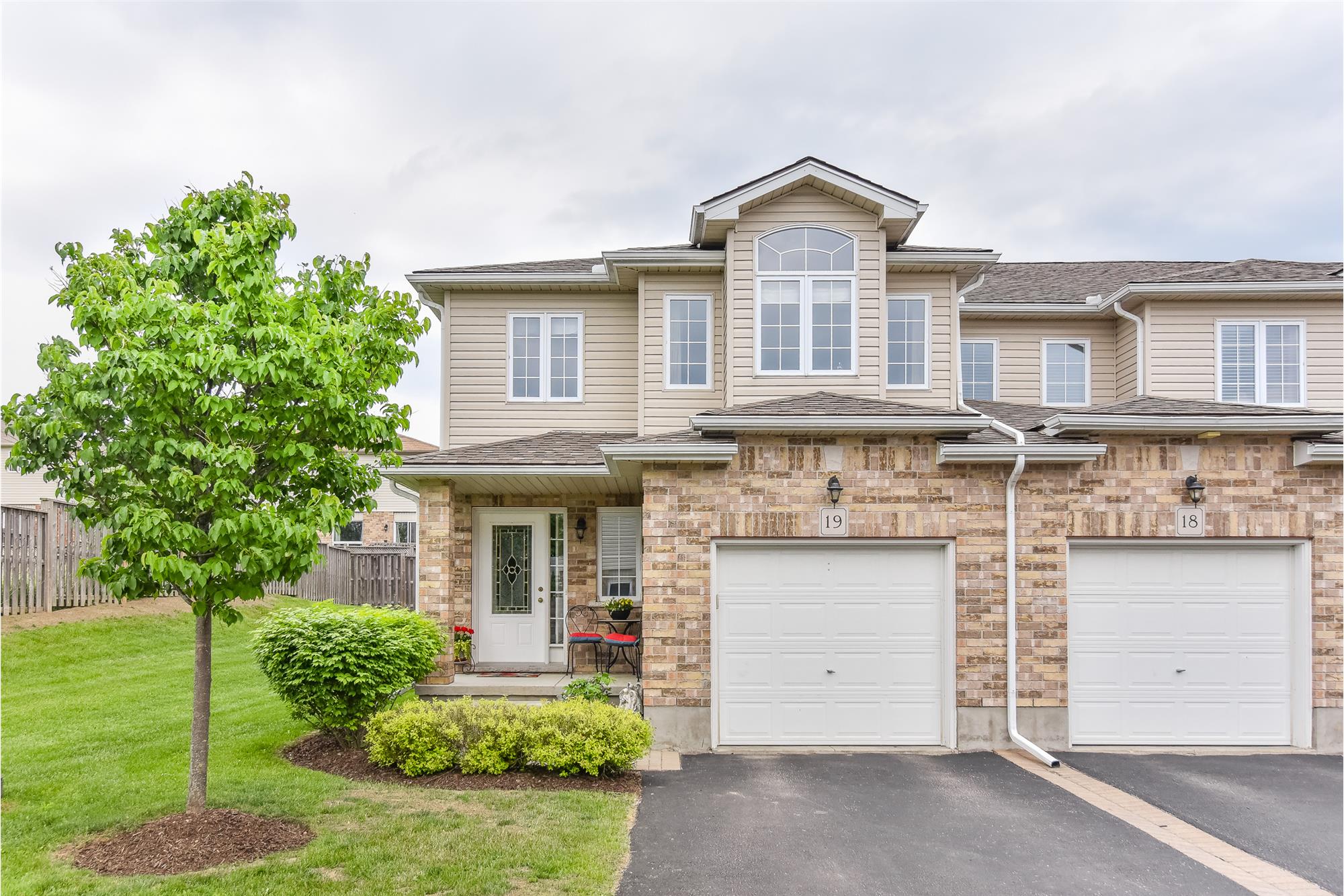
20 Shackleton Dr.19
Guelph, ONN1E 7K5
$449,900
Single Family Residential
MLS#: X4158364
3 beds2 full baths1 half bath1847 sqft
Year built: 2007
Christine Monckton
End Unit Townhouses This Nice Rarely Come Up In The Grange. So If You Have Been Looking, Your Look Is Over. This Condo/Townhouse Is A Must-See. The Open-Concept Living/Dining/Kitchen Room Offers The Ideal Layout For Those Who Need The Space For A Dining Room Table But Dont Want To Compromise Their Living Space. The Living Room Is Highlighted By The Hardwood Floors And A Gas Fireplace With A Walk Out To The Backyard Deck. The Master Suite Features Bright Large Windows, 4pc Ensuite & Walk-In Closet. The 2 Other Bedrooms Are Spacious With Goodsize Closets. Tucked Off Of The Main Hall Is A Cut
About the Neighborhood
Guelph (/wlf/ ( listen); Canada 2016 Census population 131,794)[2][4] is a city in southwestern Ontario, Canada. Known as "The Royal City", Guelph is roughly 28 kilometres (17 mi) east of Kitchener and 100 kilometres (62 mi) west of Downtown Toronto, at the intersection of Highway 6, Highway 7 and Wellington County Road 124. It is the seat of Wellington County, but is politically independent of it.
The current Guelph began as a settlement in the 1820s, started by John Galt, originally from Scotland, the first Superintendent of the Canada Company. He based the headquarters, and his home, in the community. The area – much of what became Wellington County – had been part of the Halton Block, a Crown Reserve for the Six Nations Iroquois.[5][6] Galt would later be considered as the founder of Guelph.
Because of its relatively low crime rates, clean environment and generally high standard of living, Guelph is consistently rated as one of Canada's best places to live.[7][8] Guelph has been noted as having one of the lowest unemployment rates in the country throughout the Great Recession.[9] In February 2016, it had the lowest rate in the country, at 3.9 percent, compared to the national rate of 7.3 percent; in large part, this is because of the great number of manufacturing facilities, including Linamar.[10] The unemployment rate increased over the subsequent months, however, reaching 5.9% by October 2017.[11]
For many years, Guelph ranked at or near the bottom of Canada's crime severity list.[12] By 2016, the data was less impressive but the city was still only at about the midway point in the crime statistics for Canada and well below the national average in some important aspects.[13]
Contents
[hide]History[edit]
Before colonization, the area was considered by the surrounding indigenous communities to be a "neutral" zone and was inhabited by the Neutral Nation. According to the University of Guelph, "the area was home to a First Nations community called the Attawandaron who lived in longhouses surrounded by fields of corn".[14] (The majority of this nation, about 4,000 people, lived in a village near what is now the Badenoch area of Puslinch, near Morriston.)[15]
John Galt, the first Superintendent of the Canada Company, was hired to help colonize Upper Canada.[16] He selected Guelph as the headquarters of this British development firm. Galt was a popular Scottish poet and novelist who also designed the town to attract settlers and farmers to the surrounding countryside.[17] His design intended the town to resemble a European city centre, complete with squares, broad main streets and narrow side streets, resulting in a variety of block sizes and shapes which are still in place today.[18] The street plan was laid out in a radial street and grid system that branches out from downtown,[19] a technique which was also employed in other planned towns of this era, such as Buffalo, New York.[17]

The initial founding was symbolized by Galt (with "Tiger" Dunlop,[20] who would be significant in the history of Goderich, Ontario,) felling a tree[21] on April 23, 1827. That was St. George's Day, the feast day of the patron saint of England. The name Guelph comes from the Italian Guelfo and the Bavarian-Germanic Welf. It is a reference to the reigning British monarch at the time Guelph was founded, King George IV, whose family was from the House of Hanover, a younger branch of the House of Welf sometimes spelled as Guelf or Gwelf.[22][23] The town was named to honour Britain's royal family, the Hanoverians, who were descended from the Guelfs, the ancestral family of George IV, the reigning British monarch; thus the nickname The Royal City.[19][24] The directors of the Canada Company had actually wanted the city to be named Goderich, because Lord Goderich had helped form the company, but reluctantly accepted that the village was called Guelph.[25]
Galt constructed what was one of the first buildings in the community to house early settlers and the Canada Company office; "The Priory" (built 1827–1828).[19] was located on the banks of the Speed River near the current River Run Centre for performing arts and could house up to 100 people.[26][27][28][29][30] The building would eventually become the CPR's Priory station on the Guelph Junction Railway before it was eventually torn down and removed.[31][32] A historical plaque commemorates John Galt's role with the Canada Company in populating Upper Canada's Huron Tract, calling it "the most important single attempt at settlement in Canadian history".[33] (Galt was responsible for finding settlers for the 42,000 acre Halton Block that would become Guelph and its townships but also for the one million acre Huron Tract that stretched to Goderich, Ontario.)[19]
By the fall of 1827, 70 houses had been built, though some were primitive.[34] In that year, the community had hired its first police constable; the first police station would be opened in 1856 at the town hall and it would move in 1900 to the Annex building behind the court house.[35] Also in 1827, the first Guelph Farmers' Market was built; the Market House was located in the downtown area.[36] The first Board of Commerce also started in 1927, to stimulate economic growth; in 1866, it would be renamed the Board of Trade, and in 1919, it became the Chamber of Commerce.[37] In order to eliminate the need for farmers to take their grain to Galt or Dundas for grinding, the Canada Company built the first grist mill; the Guelph Mill was sold to William Allen in 1832.[38] In 1829, the Canada Company fired Galt because of poor bookkeeping and not obeying company policies.[16] He returned to Great Britain penniless and was imprisoned because he was unable to pay his debts.[39] In 1831, Guelph had approximately 800 residents.[40] For several years, the economy of the village suffered and some residents moved away; relief came in the form of wealthy immigrants from England and Ireland who arrived in 1832.[41]
The Smith's Canadian Gazetteer of 1846 indicates that the town had a jail and court house made of cut stone, a weekly newspaper, five churches/chapels and a population of 1,240; most were from England and Scotland with a few from Ireland. In addition to many tradesmen, the community had 15 stores, seven taverns, and some industry, tanneries, breweries, distilleries and a starch factory. The Post Office was receiving mail daily.[42]
Guelph was incorporated as a town in 1855, with John Smith as the first mayor.[38] In the same year, the Grand Trunk Railroad line opened.[43] Two years later, the population was estimated at 4,500, up from 2,000 in 1853.[44]
The board of the Guelph General Hospital was incorporated in 1861, with James Massie as the chairman.[45] The building was completed in 1875, at the cost of $9,871, and opened on August 16, 1875, with 2 beds, a small infectious room and a dispensary.[46]
By 1869, the community's manufacturing companies were served by both the Grand Trunk Railway and the Great Western Railway.[47] The first section of the Wellington, Grey & Bruce Railway, between Guelph and Elora, opened in 1870; the line would eventually run as far as Southampton, Ontario[48] with stations in communities such as Palmerston, Harriston, Listowel and Wingham.[49] This company was not very successful and never did reach Owen Sound as planned, partly because of stiff competition from the Northern Railway of Canada[50] as well as the Toronto, Grey and Bruce Railway. By the mid 1870s, the Wellington, Grey & Bruce Railway was in financial trouble; it eventually became part of the Grand Trunk system, and later, the CNR.[51][52]
By January 1871, some residents of the town had access to gas, provided by the Guelph Gas Company via pipes, initially to about 100 homes.[53] Electricity would not become commonly available until the early 1900s, from the Guelph Light and Heat Commission.[54]
An 1877 plan to start the Guelph Street Railway,[55] using horse-drawn vehicles to deliver freight and passengers within Guelph, never came to fruition.[45]
A poor house with a farm, The Wellington County House of Industry and Refuge, opened in December 1877 in a rural area near Guelph; many orphans from Guelph were admitted. The building still stands, as the Wellington County Museum and Archives.[56][57]
After 1878[edit]
Guelph was incorporated as a city in 1879.[58] Despite optimism, the population growth was very slow until the Grand Trunk Railroad reached it from Toronto, en route to Sarnia, in 1856; the town was also served soon thereafter by the Great Western Railway branch from Harrisburg.[59] In 1856, the village became a town.[60]


A few years later, George Sleeman Sr. founded an electric radial railway, the Guelph Railway Company, an important part of the history of Guelph Transit. Only five miles of track had been laid by 1895, but the line was extended in 1902; the radial railway eventually reached Toronto, as the Ontario Hydro Electric Railways - Guelph District (owned by Ontario Hydro).[61] In addition to carrying passengers, the cars carted coal to heat the Ontario Agricultural College.[62]
Guelph was incorporated as a city in 1879 with a Special Act of the Ontario legislature.[63]
By 1886, telephones were quite common in the city. An April news article described the situation as follows. "Telephones are rapidly being introduced into private homes, where they prove a great convenience. Ladies order their groceries, consult their medical advisers, call their husbands home from the club and gossip with their friends by telephone."[64]
The Canadian Communist Party began as an illegal organization in a rural barn near the town of Guelph, Ontario, on May 28 and 29, 1921.[65]
Guelph was home to a major correctional institution from 1915 until 2001, originally the Ontario Reformatory with subsequent names including Wellington Detention Centre and, after 1972, Guelph Correctional Centre. The first inmates had been transferred to the Guelph facility from Toronto's Central Prison. The facility included a farm that taught inmates useful agricultural skills; inmates also learned dry cleaning, metalworking, and other trades. During World War I, the property served as the Guelph Military Convalescent Hospital a convalescent hospital for over 900 veterans; it closed as this facility in late 1920; prisoners returned in January 1921.[66][67] In 1972, the centre still housed 450 prisoners but was closed; the inmates were transferred to larger jails.[68] Afterwards, the facility was used for some film shoots and for training emergency personnel. In December 2017, City Council voted to buy 98 hectares (243 acres) for subsequent sale to developers, including the area that was then the Turf Grass research building and the jail farm. The actual area around the buildings of the Correctional facility was not included.[69][70]
Guelph was the home of North America's first cable TV system. Fredrick T. Metcalf created MacLean Hunter Television (now part of Rogers Communications) and their first broadcast was Queen Elizabeth's Coronation in 1953.[22]
Guelph's police force had Canada's first municipal motorcycle patrol. Chief Ted Lamb brought back an army motorcycle he used during the First World War. Motorcycles were faster and more efficient than walking.[22]
The city is home to the University of Guelph, established in 1964, and Sleeman Breweries Ltd.. The Ontario Agricultural College (OAC), the oldest part of the University of Guelph, began in 1874 as an associate agricultural college of the University of Toronto. Guelph Collegiate Vocational Institute (GCVI), established in the 1840s, is one of the province's oldest high schools.
Guelph has three buildings on the National Historic Sites of Canada register: the Basilica of Our Lady Immaculate, McCrae House and Old City Hall.[71]
In 2017, Scientology Canada announced it would move its Canadian headquarters to Guelph.[72] Some residents protested the plan.[73] The facility was opened in the autumn of the year at 40 Baker Street.[74]
Recent population data[edit]
As of May 2016, the population of the actual city was 131,794 according to the 2016 Census up from 121,688 in 2011.[75] This report also indicated a metropolitan area which does not necessarily conform to the official boundaries. The so-called metropolitan area - including Guelph, Guelph/Eramosa and Puslinch - had a population of 151,984, an increase of 7.7 per cent since 2011.[76] That made it one of seven in Canada to experience accelerated growth in the previous five years according to Statistics Canada.[77]
More details
End Unit Townhouses This Nice Rarely Come Up In The Grange. So If You Have Been Looking, Your Look Is Over. This Condo/Townhouse Is A Must-See. The Open-Concept Living/Dining/Kitchen Room Offers The Ideal Layout For Those Who Need The Space For A Dining Room Table But Don’t Want To Compromise Their Living Space. The Living Room Is Highlighted By The Hardwood Floors And A Gas Fireplace With A Walk Out To The Backyard Deck. The Master Suite Features Bright Large Windows, 4pc Ensuite & Walk-In Closet. The 2 Other Bedrooms Are Spacious With Goodsize Closets. Tucked Off Of The Main Hall Is A Cut

Christine Monckton
Keller Williams Real Estate Associates
000-9058128123
Listed by: Royal LePage Meadowtowne
Copyright. RealBird Inc. All Rights Reserved.